Blog
Explore news, articles, outcomes, and legal resources by category or practice area.
Thank you! Your submission has been received!
Oops! Something went wrong while submitting the form.
deselect
No items found...
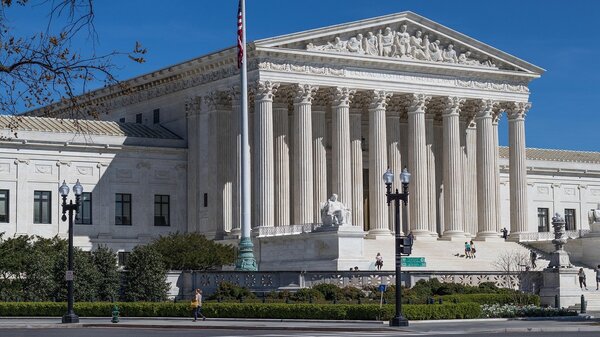
On June 27, 2025, in an Opinion authored by Justice Amy Coney Barrett, the United States Supreme Court determined that “universal injunctions,” injunctions issued by district judges that apply nationwide, “likely exceed the equitable authority that Congress has given to federal courts.” In Trump v. CASA, Inc., the Supreme Court, with a 6-3 vote, concluded that district courts do not have authority to issue universal injunctions which seek to prohibit the enforcement of a law or policy against anyone nationwide. The decision limits the relief afforded by the district courts in consolidated matters to only the parties in those actions.
By prohibiting the use of “universal injunctions” in federal courts, litigants already have started to utilize another procedure to seek the relief they seek – class actions. Class actions are a special procedure provided by both federal and state law that allows one or more class representatives to file suit and seek to represent the interests of other similarly situated individuals or companies. Prior to the Supreme Court’s ruling in Trump v. CASA, Inc., a single litigant could apply for a universal injunction through an individual action. Now that the Supreme Court has declared that process unavailable for application of an injunction nationwide, class actions may be the procedural process litigants attempt to use to achieve that same purpose. It remains to be seen whether class actions will be an effective way to achieve broader relief for individuals impacted by government policies.
References:
Trump v. CASA, Inc., --- S.Ct. ---, No. 24A884, 2025 WL 1773631 (U.S. June 27, 2025).

Courts around Louisiana continue to address factual scenarios for when summary judgment on an insured’s first party bad faith claim may be appropriate.
In Creamer Brothers Inc. et al. v. General Casualty Co. of Wisconsin, the federal court for the Western District of Louisiana addressed an insured’s claim for bad faith penalties and attorney’s fees arising out of an insurance claim for damages sustained in a February 2021 ice storm. The pertinent timeline is as follows:
The insurer argued summary judgment was appropriate because its damage assessment created a reasonable, well-founded dispute regarding the extent of damage caused by the ice storm. Plaintiff disagreed, arguing bad faith attached because the insurer relied solely on its own expert reports which they argued amounted to an investigation that was so inadequate it could be deemed unreasonable.
The Court sided with the insurer, granting its summary judgment. In so holding, the Court relied on the portion of La. R.S. 22:1892 which provides an insurer’s conduct must be “arbitrary, capricious, or without probable cause” for bad faith to attach. Specifically, the Court stated, “the fact that the parties’ experts reached different conclusions in their respective assessments gives rise to a dispute in the extent of Plaintiffs’ coverage, but does not illustrate a genuine issue of fact as to General Casualty’s ‘bad faith.’”
The Court noted the insurer sufficiently communicated with the insured, provided the insured with multiple expert reports containing their data and conclusions, and “ultimately made payments to Plaintiffs in accordance with those conclusions.” Plaintiff failed to point to evidence General Casualty’s conduct was arbitrary, capricious, or without probable cause, “despite yielding unsatisfactory results.”
In a case out of the Eastern District, Gentilly, LLC v. State Farm Fire & Cas. Co., the Court similarly relied on plaintiff’s failure to establish a general issue of material fact to show the insurer’s conduct was “arbitrary, capricious, or without probable cause.” The Gentilly case arose out of the plaintiff’s insurance claim for damages sustained to its commercial shopping center during Hurricane Ida. The parties engaged in a series of inspections, estimates, expert reports, payments, and supplemental payments over the course of about thirteen months, followed by several months of inactivity, then another period of investigation and adjustment over the course of about nineteen months.
Plaintiff argued the insurer’s 43-day delay in its first payout, failure to have an engineer inspect the property for a year, and gross under-evaluation of the damages as evidenced by its supplemental tender supported its bad faith claim. The Court disagreed.
In support of its conclusion, the Court noted the insurer advised plaintiff the inspection would take multiple days, and the delay in issuing payment arose out of the inspectors’ availability. The Court noted the insurer’s actions were “consistently in line with its expert appraisals.” In conclusion, the Court stated, “[t]hough the payout process was protracted by the scope and complexity of the insured loss, plaintiff fails to raise a genuine issue of material facts indicating that State Farm’s actions were arbitrary, capricious, or without probable cause.”
Louisiana courts have not established a bright-line rule for determining when summary judgment is appropriate on an insured’s bad faith claim. However, these cases seem to suggest that continued adjustment over a period of time may not give rise to bad faith claims where an insured cannot cite to evidence an insurer’s conduct was “arbitrary, capricious, or without probable cause.”
References:
Creamer Brothers Inc. et al. v. General Casualty Co. of Wisconsin, No. 22-cv-6110, 2025 WL 818579 (W.D. La. Mar. 13, 2025).
Gentilly, LLC v. State Farm Fire & Cas. Co., No. 23-cv-262, 2024 WL 5246606 (E.D. La. Dec. 30, 2024).
Keogh Cox is pleased to announce that our firm has been ranked in the 2025 edition of Chambers USA in Construction. Thank you to our clients for your support and confidence in us. Congratulations to our Construction Group for their outstanding work: John P. Wolff, III, Mary Anne Wolf, Tori S. Bowling, Brian T. Butler, and Chelsea A. Payne.
Keogh, Cox & Wilson, Ltd, Construction | Chambers USA Profile


Arbitration is a favored method of dispute resolution in the energy and construction sectors, where complex, high-value contracts often generate multimillion-dollar disputes. Understanding the courts' standard of review of arbitration awards directly impacts risk assessment, contract drafting, and dispute resolution strategies. A recent U.S. Fifth Circuit decision reinforces the limited grounds for judicial intervention, a principle that remains central to the effectiveness of arbitration as an efficient alternative to litigation.
In United States Trinity Services, LLC v. Southeast Directional Drilling, LLC, a drilling subcontractor obtained a $1.7 million arbitration award against the general contractor for standby costs incurred on a pipeline installation project. The subcontractor incurred costs when ordered to stop work for causes outside its control, including delayed permits, mud infiltration, and COVID-19. The subcontract contained a provision that called for reimbursement of standby costs. On appeal, the general contractor sought to vacate the award in the U.S. Northern District of Texas, arguing that the arbitration panel failed to properly interpret various contract provisions related to standby costs and exceeded its authority and acted in manifest disregard of Texas law in interpreting the contract.
The Federal Arbitration Act, 9 USC §10 (“FAA”) applies and provides the exclusive grounds to vacate an award: corruption, fraud, evident partiality, misconduct in refusing to postpone the hearing, refusing to hear evidence, or where arbitrators exceeded their powers. The U. S. Fifth Circuit Court of Appeals noted that the FAA was enacted to create a national policy favoring arbitration; the arbitrator’s authority derives from the parties’ contract; and once parties agree to arbitrate, they “bargain for” the arbitrator’s, not the court’s, interpretation of their contract.
The Court instructed that a party challenging an award bears a high burden to show that the arbitrator ignored the contract. It is not sufficient to show the arbitrator erred in interpreting the contract. The question the court asks is “whether the arbitrators construed the contract at all” not “whether they construed it correctly.” A court should not reassess the merits of the arbitrator’s decision. Here, the award recited the pertinent contract terms and the arbitrators’ analysis. This showed the arbitrators considered the contract provisions, thus ending the Court’s inquiry.
The Court rejected the argument that the arbitrators manifestly disregarded the law in interpreting the contract. “Manifest disregard” – a judicially-created concept – is not a freestanding ground for vacatur. It does not serve as a separate basis to establish that arbitrators exceeded their powers. Otherwise, the FAA’s stated grounds for vacatur would be expanded to essentially a “full-bore” judicial review process.*
However, the Circuits are split on the validity of manifest disregard of the law or contract as a basis to vacate an award. See for example, Dewan v. Walia, where the U.S. Fourth Circuit Court of Appeals vacated an award after finding the arbitrator’s contract interpretation ‘untenable.”
Mary Anne Wolf, PE, FCIArb, is an arbitrator, mediator, and attorney in construction, energy, commercial and complex cases.
References:
United States Trinity Services, LLC v. Southeast Directional Drilling, LLC, 2025 WL 1218096 (5th Cir. 2025).
Dewan v. Walia, 544 Fed Appx 240 (4th Cir. 2013).
* Hall Street Assoc., LLC v. Mattel, 128 S.Ct. 1396 (2008).

In 2024, the Louisiana Legislature revised La. R.S. 22:1269, the Louisiana Direct Action Statute, to provide an injured person “shall have no right of direct action against the insurer” unless one of several exceptions applies. This legislation took effect on August 1, 2024. Since its effective date, litigants in Louisiana have debated whether this change to the law was substantive or procedural. If the amendment were procedural, it would apply to all cases filed after August 1, 2024. If substantive, the changes would only apply when the accident occurred after August 1, 2024.
While several Federal Court cases previously addressed this issue, no Louisiana appellate court had done so until the Louisiana Fourth Circuit Court of Appeal issued its ruling in Hurel v. National Fire and Marine Ins. Co., et at.
In Hurel, the plaintiff filed suit on October 1, 2024, naming the insurer and other parties as defendants in a case filed in connection with a motor vehicle accident. The insurer filed an Exception of No Right of Action, Motion to Strike, and a Motion in Limine, on the basis that the amendment to the Direct Action Statute prohibited the plaintiff from (1) naming the insurer in the case caption and (2) presenting evidence of insurance coverage at trial. In response, the plaintiff argued that the amendment could not apply because the accident occurred before the effective date of the statutory amendment. The trial court denied the exception, the motion to strike and the motion in limine.
On appellate review, the Louisiana Fourth Circuit cited prior jurisprudence that routinely found the Direct Action Statute granted a procedural right of action against an insurer where the plaintiff has a substantive cause of action against the insured. The Court found the recent amendments “removed the procedural right of action against an insurer.” The plaintiff had a procedural right of action, but it became operative only when, and if, that right was invoked timely— that is before the amendment went into effect.
After August 1, 2024, the plaintiff had no right or interest in a direct action against the insurer. Thus, because the plaintiff did not have a statutory right of direct action against the insurer, the Court granted the insurer’s exception. For the same reasons, the court of appeal also granted the insurer’s Motion in Limine to prevent plaintiff from disclosing insurance coverage to the jury and granted its Motion to Strike the insurer’s name from the case caption.
Reference:
Hurel v. Nat'l Fire & Marine Ins. Co., 2025-0049 (La. App. 4 Cir. 3/11/25), --- So.3d ---, 2025 WL 762645.

Until recently, tort claims in Louisiana were subject to a one-year prescriptive period.* In Carollo v. Tulane Univ., the plaintiff’s claim was subject to that one-year prescriptive period, but she filed her suit more than one year after she was injured. Thus, the plaintiff’s claim was dismissed as prescribed. In so holding, the court rejected the plaintiff’s claim that her execution of a waiver form prevented her from timely filing suit for her alleged injuries.
The plaintiff was a member of Tulane’s Swim and Dive Team. As a team member, she signed Tulane’s Concussion Education Form, which concluded with the following statement: “I understand that this release means that, among other things, I am giving up my right to sue the institution for any such losses, damages, injury, or costs that I may incur.” Plaintiff sustained a concussion during practice on January 9, 2021. In her Petition, she alleged she discovered the full extent of her injuries on August 5, 2021. However, she did not file suit until February 17, 2023, which was beyond the one-year prescription period.
When a claim is prescribed on the face of the petition, the burden shifts to the plaintiff to prove her claim is not prescribed. Carollo first argued (1) the Concussion Education Form was a contract, (2) her claim arose from that contract, and (3) personal claims under contracts should be subject to a ten-year prescriptive period under La. C.C. art. 3499. The court rejected this argument because the concussion form did not meet the requirements for a valid contract under Louisiana law.
The plaintiff then argued that the doctrine of contra non valentem should apply. This doctrine provides “prescription does not run against one who is ignorant of the facts upon which their cause of action is based and applies an exception to the statutory prescriptive period where in fact and for good cause a plaintiff is unable to exercise his cause of action when it accrues.”
Contra non valentem can apply when there is some condition coupled with a contract that prevented the plaintiff from filing suit. The court rejected the plaintiff’s arguments asserting this theory. Even if Carollo could establish a contract with Tulane under the concussion form, she could not point to any physical, mental, or procedural condition that prevented her from investigating her tort claims and filing suit against it.
Contra non valentem can also apply when the defendant does some act effectually to prevent the plaintiff from availing herself from her cause of action. The plaintiff argued that she was forced to sign the concussion form as a member of the Swim and Dive Team and that the form prevented her from filing suit within the prescriptive period. The court also rejected this argument, holding the plaintiff “knew about her concussion related injuries but did not perform her due diligence within the prescriptive period to determine whether she could file suit.”
Accordingly, the plaintiff’s execution of a waiver form stating she agreed not to sue the defendant for injuries could not interrupt prescription for the plaintiff’s claim.
*La. C.C. art. 3493.1, which went into effect on July 1, 2024, now provides delictual actions/tort claims are subject to a liberative prescription of two years.
References:
Carollo v. Tulane Univ., 2024-0038 (La. App. 4 Cir. 1/9/25), --- So.3d ---, 2025 WL 52557.
Keogh Cox is pleased to announce that five attorneys were named to the 2025 Louisiana Super Lawyers list:
Four attorneys were selected to the 2025 Louisiana Super Lawyers “Rising Stars” list:


The Fourth Circuit recently affirmed summary judgment Keogh Cox obtained in Clark v. Premier Automotive Management, LLC, finding the plaintiff’s circumstantial evidence failed to establish an unreasonable risk of harm caused her to fall.
In Clark, the plaintiff claimed she was injured after slipped and fell in a puddle of water in a service garage. Keogh Cox attorneys Chad A. Sullivan and Cole C. Frazier filed a motion for summary judgment on behalf of the defendants in response. The defendants asserted that the plaintiff failed to submit sufficient proof to establish that standing water or a hazardous condition caused her fall. Specifically, the defendants maintained that the plaintiff could not establish (1) an unreasonable risk of harm existed within the garage or (2) the puddle of water existed on the garage floor for an extended period of time.
The plaintiff’s deposition testimony established that it rained earlier in the day, that she was walking quickly before she fell, and that she was wearing flip flops. The plaintiff also testified she assumed she fell in a puddle of water because her back was damp after her fall. She described the amount of water under her shoes as the size of a “softball.”
The defendants also attached the affidavits of two employees who worked at the service garage on the day of the incident. The affidavits acknowledged wet conditions on the day of the incident but denied any prior complaints or accidents in the area. The affidavits also established that the plaintiff fell in an uncovered area of the garage that slopes downward. Thus, there was no possibility for standing water or puddles to collect.
Based upon this evidence, the appellate court found that the defendants satisfied their burden of proof to show there was no unreasonable risk of harm. The court stated the burden then shifted to the plaintiff to establish that there was an unreasonable risk of harm and thus establishing a genuine issue of material fact. However, the court found that the plaintiff failed to meet her burden because all her arguments were based upon conclusory allegations and unsupported speculation. To support her claims, the plaintiff could only cite to the “possibility” of the existence of standing water or puddles. As such, the plaintiff only speculated whether a hazardous substance or an unreasonable risk of harm caused her fall. Such speculation was insufficient to establish a genuine issue of material fact.
In so holding, the court affirmed the dismissal of the plaintiff’s claims that Keogh Cox obtained through summary judgment.
References:
Clark v. Premier Auto. Mgmt., LLC, 2024-0397 (La. App. 4 Cir. 2/10/25), --- So.3d ---, 2025 WL 451473.

In Barber Brothers Contracting Company, LLC v. Capitol City Produce Company, LLC, the Louisiana Supreme Court re-examined how Louisiana courts should review general damage awards. The Court noted its decision also was intended to clarify its prior ruling in in Pete v. Boland Marine & Mfg. Co., which addressed the same issue. To review our prior analysis of the Court’s holding in Pete, click here.
Traditionally, Louisiana has required a two-step analysis for appellate review of a lower court’s damage awards. First, the appellate court must determine whether the trier of fact “abused its discretion” in assessing damages. Courts generally found a damage award abused discretion if it “shocked the conscience,” a standard critics argued was too subjective. Second, and only if the award “shocked the conscience,” courts could consider prior awards to establish the highest or lowest reasonable award.
In Pete, the Court held that courts of appeal should compare verdicts to general damage awards in similar cases during the first step of analysis to determine whether a trial court abused its discretion. This approach suggested general damage awards should not be solely based on the subjective findings of the jury but should be grounded in objective comparisons to other cases. It was thought this also served the purpose of maintaining consistency and reasonableness of damage awards. The Pete decision was seen by many as an attempt to address Louisiana's trend of rising verdicts, which critics argued were contributing to higher insurance premiums in the state.
However, in Barber Bros., the Supreme Court revisited these issues, when it examined a jury verdict that awarded the plaintiff $10.75 million in general damages, $2.5 million to his wife for loss of consortium, and $1.5 million to each of their two children. The jury found the plaintiff sustained extensive physical injuries and a traumatic brain injury, which significantly impacted his personality, lifestyle, and self-image.
Citing Pete, the Louisiana Supreme Court initially reduced the awards to $5 million for the plaintiff, $400,000 for his wife, and $100,000 for each child. However, upon rehearing, the Court reinstated the original general damages award. Citing Pete again, the court clarified how damage awards should be reviewed on appeal as follows: (1) courts should determine whether abuse of discretion occurred by examining the particular facts and circumstances of the case, to include a “consideration of prior awards in similar cases,” and (2) if abuse of discretion is found, “the court is to then also consider those prior awards to determine ‘the highest or lowest point which is reasonably within that discretion.’”
The Court clarified that the consideration of prior awards should be balanced with an examination of the unique facts and circumstances of each case. Considering the facts of Barber Bros., the Court held it did not adequately account for the effects of the plaintiff’s injuries upon initial hearing. While the jury award was “on the high end of the range of reasonable awards,” the court found it was not disproportionate to prior awards and “bore a reasonable relationship” to the evidence presented at trial. Thus, the award did not “shock the conscience” and should not have been adjusted following the initial hearing.
The Barber Bros. decision may be limited to the facts presented in that case. However, the ruling appears to suggest that prior verdicts are only a factor to be weighed against a case’s facts to assess whether a trial court abused its discretion with a general damage award that “shocks the conscience.” While the court did not overturn Pete, the Barber Bros. case appears to re-open the door for damage awards to be based upon more subjective assessments of the jury and not the more objective standards the Pete decision initially appeared to create. It remains to be seen how much weight prior decisions will carry when courts address these issues moving forward.
References:
Barber Brothers Contracting Company, LLC v. Capitol City Produce Company, LLC, 23-788 (La. 12/19/24), 397 So. 3d 404.
Pete v. Boland Marine & Mfg. Co., 23-170 (La. 10/20/23), 379 So. 3d 636, reh'g denied, 23-170 (La. 12/7/23), 374 So. 3d 135.