Blog
Explore news, articles, outcomes, and legal resources by category or practice area.
Thank you! Your submission has been received!
Oops! Something went wrong while submitting the form.
deselect
No items found...

In a previous blog, we outlined developing law in the Louisiana appeals courts, and federal district courts in Louisiana on the issue of whether a claimant may maintain a separate cause of action against an employer for independent negligence when it is stipulated that the employee was in the course and scope of employment.1 Most courts held a claimant could not maintain a separate action against the employer under these circumstances, reasoning that the employee’s fault would impute to the employer, and therefore, additional inquiry was not appropriate. However, the Louisiana Supreme Court recently addressed the issue and stated:
“(A) plaintiff may pursue both a negligence cause of action against an employee for which the employer is vicariously liable and a direct claim against the employer for its own negligence in hiring, supervision, training, and retention as well as a negligent entrustment claim, when the employer stipulates that the employee was in the course and scope of employment at the time of the injury.” (Emphasis added) See Martin v. Thomas et al., 21-1490 (La. 12/21/21), 328 So. 3d 1164.
This holding notably overturned the 1st Circuit Court of Appeal ruling in Elee v. White, - - So.3d - - (La. App. 1 Cir 7/24/20), 2020 WL 4251974 and other Louisiana 5th Circuit Court of Appeals decisions. The Supreme Court in Martin reasoned that “the initial assessment of fault required by the law is not bypassed due to the employer-employee relationship” and “shielding a potential tortfeasor from liability is not compatible with a comparative negligence regime.” The Court further stated that the possibility that both the employee and employer may be at fault is not “subsumed” by the employer’s admission on course and scope. In fact, if the fault of the employee is shown, then the issue of whether there is also fault on the part of the employer remains and must be decided by the evidence on a case-by-case basis.
The consequences of this decision remain to be seen, but it is expected that claimants may also pursue employers separately on theories such as negligent hiring, supervision, and entrustment. The scope of such discovery will remain within the sound discretion of the trial judge.
By: John P. Wolff, III and Richard W. Wolff
Keogh Cox to sponsor the AIA Louisiana Conference on Architecture held October 6-7, 2022, in Gulf Shores, AL. For more information about the conference, please visit AIA LA ’22 Conference on Architecture
Keogh Cox to sponsor the Summer Conference of the Louisiana Associated General Contractors held July 6-10, 2022 in Miramar Beach, FL. For more information about the conference, please visit 2022 Annual Summer Conference (lagc.org)
Limited liability companies (“LLCs”) are usually formed with the goal of protecting its members from personal liability for the actions of the LLC. Under Louisiana law, there is a “presumption” that the members of an LLC are not personally responsible for the liabilities of the LLC. However, a recent Third Circuit decision highlights how an LLC member may be exposed to personal liability for performance of a contract when the LLC’s name is not displayed on the contract.
In Bourque v. Bergeron, 2021-108 (La. App. 3 Cir. 12/1/21), 331 So. 3d 1089, the plaintiff filed suit against his contractor seeking damages from allegedly defective work. The contractor filed a motion to dismiss the claims against him individually, arguing that he was acting on behalf of his LLC and therefore had no personal liability. In support of his motion, the contractor introduced evidence that: (1) the contractor was the sole member of the LLC; (2) the required contracting license was in the name of the LLC; and (3) plaintiff’s checks were deposited into the LLC’s financial accounts.
The plaintiff argued that he contracted with the contractor individually, and the contractor did not represent that he was acting on behalf of an LLC. The proposal and invoices listed a business name, but did not indicate the business was an LLC. The trial court granted the contractor’s motion, finding the evidence showed the plaintiff was dealing with the LLC, and not the contractor individually.
On appeal, the Third Circuit recognized the general rule that an LLC member is not personally liable for acts committed by the LLC. However, it found an LLC member can be personally liable when they fail to disclose that the member is contracting on behalf of the LLC. The court noted that the proposal/invoice did not reflect the LLC’s involvement – it only included a business name along with the contractor’s individual name and address. Simply including a business name was not sufficient to alert plaintiff he was contracting with an LLC as opposed to an individual with a tradename. The Third Circuit reversed the trial court’s dismissal of the personal liability claims, finding issues of fact as to whether the contractor disclosed that he was acting on behalf of the LLC, which opened the door for potential personal liability for the LLC member.
This case shows that LLC members can create personal liability if they do not express that the LLC is the true party to the contract.
The use of biomechanical expert testimony in Louisiana courts has evolved over the last few years. A recent decision from the Louisiana Fifth Circuit Court of Appeal provides an example of the changing standards for the admissibility of biomechanical expert testimony and its relation to medical causation.
In Pollard v. 21st Century Centennial Ins. Co., 21-65 (La. App. 5 Cir. 12/23/21), 334 So. 3d 1013, writ denied, 2022-00163 (La. 4/20/22), the defendants argued that the underlying accident involved a minor rear-end impact not likely to cause injury. The defendants hired a biomechanical expert who was also a medical doctor. The expert performed an “impact severity analysis” to determine the force of impact in the collision.
The expert concluded that the accident involved a minimum damage collision; he relied upon the “force reflection method” and test data at his crash test facility to determine how fast the rear-ending vehicle would have traveled to cause the damage present on the plaintiff’s vehicle. Based upon his findings, the expert opined that the plaintiff was not seriously injured in the collision. He went further to testify that specific injuries could not have been caused by the forces involved.
The Fifth Circuit noted the same expert was previously excluded in a case that went to the Louisiana Supreme Court in Blair v. Coney, 2019-00795 (La. 4/3/20), reh'g denied, 2019-00795 (La. 7/9/20), 298 So. 3d 168, where the Court found the expert’s testimony to be based upon insufficient facts or data. In Blair, the Supreme Court found the expert’s testimony should be excluded because he did not (1) inspect either vehicle involved in the collision; (2) speak with the damage appraisers; (3) know the plaintiff’s body position at the time of the accident; (4) inspect plaintiff’s vehicle for variance from the test-vehicle or (5) interview the plaintiff. Thus, his testimony failed to meet the requirements of C.E. art. 702(A)(2).
Citing the Blair decision, the Louisiana Fifth Circuit in Pollard concluded that the expert “relied on the same [improper] methodology in reaching his conclusions.” Therefore, the appellate court found the trial court erred in denying a motion in limine to exclude the expert’s testimony. Although the expert cited to peer-reviewed literature to support his conclusions, the evidence revealed that “most of the research and articles” he cited were either written by him or one of his employees.
Effective January 1, 2021, Louisiana amended La. R.S. 32.295.1, which now allows the admission of a plaintiff’s failure to wear a seat belt as a factor to be considered in comparative fault. Defendants will seek to use biomechanical experts to prove that the failure to use a seatbelt substantially caused or contributed to the damages.
Biomechanical testimony may be allowed. However, as shown in Pollard, biomechanical opinions which lack sufficient inquiry to match the analysis to the real-world impact will be treated with skepticism. Taking Blair and Pollard together, the courts appear to resist expert biomechanical opinions which seek to definitively resolve medical causation which often involves subjective elements and credibility determinations reserved for the trier of fact.
It is certain that defendants will continue to advance the “low impact” argument because force-of-impact testimony is a relevant factor in determining causation or extent of injuries. See, e.g., Merrells v. State Farm Mutual Auto, Ins. Co., 33-404 (La. App. 2 Cir. 6/21/00), 764 So. 2d 1182. What is less than certain is the role of the biomechanical expert. Following the Fifth Circuit’s decision in Pollard, the Louisiana Supreme court denied the defendant’s writ application 4 to 3, with all three dissenters advising they would have granted the writ. Issues surrounding the use and scope of testimony from biomechanical experts appear far from settled.
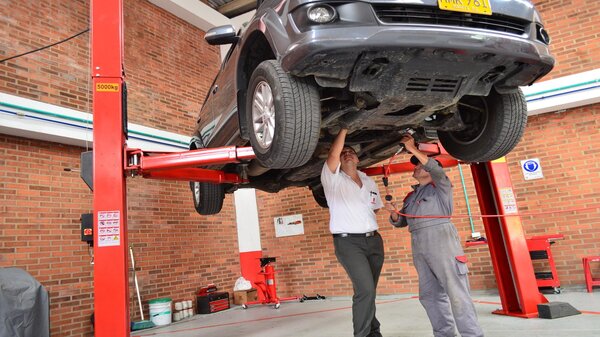
Louisiana insurance law recognizes a practical problem faced by many: the need to obtain alternative transportation when the car won’t start. Under La. R.S. 22:1296, any insurance on your personal vehicle must also extend to vehicles that are used as “temporary substitute autos.”
The statute provides that a car’s status as a “temporary substitute auto” depends on how the term is defined in the particular auto policy at issue. However, some rules typically apply to determine whether the auto is a “temporary substitute.” First, the use must be temporary, i.e. limited in duration. Second, the car must be a substitute for the auto insured under the policy and used for the same purpose. Third, policies typically limit coverage to substitute vehicles that the driver does not own.
Some policies also limit coverage by requiring that the substitution be needed for a purpose identified in the policy, such as the breakdown, repair, or destruction of the covered auto.
While the statute generally defers to the definition of “temporary substitute auto” provided in the policy, sometimes courts will overrule the insurer’s definition. For instance, in State Farm Mutual Automobile Insurance Company v. Safeway Insurance Company, 50-098 (La. App. 2 Cir. 9/30/15), 180 So.3d 450, the relevant policy defined a “temporary substitute auto” as a substitute for the owned auto when the owned auto was “being serviced or repaired by a person engaged in the business of selling, repairing, or servicing motor vehicles.” The case involved a motor vehicle accident that occurred while the policy holder operated a borrowed vehicle but before she brought her usual vehicle to a mechanic.
Citing the terms of the policy, the insurer denied coverage on grounds that the policy required the “temporary substitute auto” not only take the place of the driver’s usual vehicle, but also that the driver take the car to a mechanic before coverage would extend to the substitute vehicle. However, the court found this requirement to be against the public policies behind La. R.S. 22:1296 and found coverage under the policy extended to the borrowed vehicle.
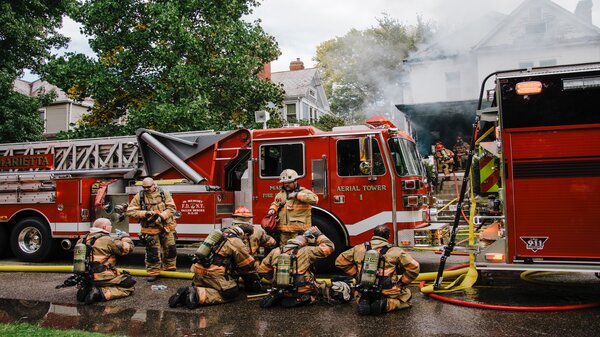
Historically, Louisiana law provided that a professional rescuer injured in the performance of his or her duties “assumes the risk” of an injury and is not entitled to damages. See Worley v. Winston, 550 So.2d 694, 696 (La. App. 2 Cir.), writ denied, 551 So.2d 1342 (La. 1989). This is known as the Professional Rescuer’s Doctrine and applied as a defense to claims raised by firefighters, policeman, and others. The doctrine prevented recovery because the professional rescuer “assumed the risk” of injury. Recently, the Louisiana Supreme Court in Doe v. McKesson, 2021-00929 (La. 3/25/22) rejected the doctrine as a bar to suit by the professional rescuer.
In Doe, the Supreme Court of Louisiana accepted a certified question from the Fifth Circuit of the United States Court of Appeals as to the viability of the doctrine. In response, the Supreme Court held that the Professional Rescuer’s Doctrine has been abrogated in Louisiana both legislatively under La. C.C. art. 2323 and jurisprudentially in Murray v. Ramada Inns, Inc., 521 So.2d 1123, 1132 (La. 1988).
The Court cited La. C.C. art. 2323(A), which provides that the fault of “all persons […] shall be determined” in a civil action. Subsection (B) of the article provides this rule applies “to any claim for recovery of damages for injury, death, or loss asserted under any law or legal doctrine or theory of liability, regardless of the basis of liability.”
In Murray, the Supreme Court previously held that the doctrine of assumption of risk no longer had a place in Louisiana tort law following the adoption of comparative fault. Nevertheless, the Murray Court identified two exceptions:
Murray, 521 So.2d at 1134. (internal citations omitted).
The Doe court observed that Murray provided no exception relative to professional rescuers. The Court further observed that, while the legislature had enacted statutes that bar plaintiff recovery in other settings, no such statute had been passed to codify the Professional Rescuer’s Doctrine.
Although professional rescuers injured in the performance of their duties may still be found at fault, the is no longer an automatic bar to suit.
Keogh Cox attorney, Mary Anne Wolf, presented Legal Basics for Engineers at the Louisiana Engineering Society’s Baton Rouge Chapter luncheon on April 28, 2022. Mary Anne is a licensed engineer and attorney who represents design professionals and others in construction litigation. Keogh Cox is privileged to serve as a Gold Corporate Member of the Chapter.For more information about the Louisiana Engineering Society, please visit brchapter.les-state.org

In cases that involve physical injury, defendants often request an “Additional Medical Opinion [AMO]” from a physician of their choice as part of the defense of the case. Louisiana Code of Civil Procedure article 1464 allows a defendant to select a physician to perform a physical and/or mental examination of a plaintiff to challenge the plaintiff’s claimed physical and mental injuries. At times, a plaintiff may voluntarily agree to the examination. However, if an objection is lodged to the requested examination, a defendant must proceed with a Motion to Compel the Additional Medical Opinion. In the context of the motion, the defendant must establish the following for the AMO to be ordered pursuant to article 1464:
Because Louisiana courts routinely hold that a plaintiff puts his or her physical and mental condition in “controversy” by filing suit and requesting damages for physical and mental pain and suffering, the focus of a motion for an AMO is often on the “good cause” requirement. “Good cause” is not defined in La. CCP article 1464, and its meaning is not clear. Recently, however, the Louisiana Supreme Court provided guidance on the issue in the case of Hicks v USAA General Indemnity Company, et al., holding that a showing of “good cause” requires that a moving party establish a reasonable nexus between the requested examination and the condition in controversy.
In Hicks, the defendant moved for an AMO with an orthopedic surgeon after plaintiff filed suit, alleging personal injuries to his neck, back, and arm as a result of an accident. In the context of the Motion to Compel, it was argued the plaintiff put his physical condition in controversy by alleging injury. The defendant noted plaintiff treated with two physicians, one of whom did not believe plaintiff was a surgical candidate. The defendant also maintained “good cause” existed because a plaintiff “who asserts mental or physical injury… places that mental or physical injury clearly in controversy and provides the defendant with good cause for an examination to determine the existence and extent of such asserted injury.” In support of this argument, the defendant also highlighted inconsistent medical testimony concerning plaintiff’s physical conditions and treatment in support of “good cause.”
In opposing the motion, the plaintiff argued “good cause” was absent because two physicians already had offered opinions on plaintiff’s condition and treatment.
The trial court denied defendant’s Motion to Compel AMO on grounds that “good cause” did not exist. The trial court noted that two physicians already had been deposed and that a physician selected by the defendant could review plaintiff’s medical records and the depositions of the other doctors to offer an additional medical opinion at trial. The case proceeded to trial, where the defendant introduced testimony from a physician who relied upon the materials referenced in the court’s ruling to support his medical opinion. Not surprisingly, the plaintiff argued the opinion of the defendant-selected physician should be discredited because he never examined plaintiff.
After a trial judgment in favor of plaintiff, the defendant appealed. The appeal court also concluded “good cause” did not exist for the AMO, noting the absence of “definitive guidelines as to what constitutes good cause.” The appeal court also noted the fact that defendant had the ability to obtain the desired information by other means was relevant in deciding whether good cause was shown.
The Louisiana Supreme Court reversed the lower courts’ decisions. It started its analysis by noting the basic premise of our system of justice: that both sides to a dispute stand on equal footing in gathering evidence and preparing for trial. It noted the AMO allowed under La. CCP article 1464 actually limits the extensive discovery permitted under Louisiana law, as it balances considerations of “sanctity of the body and the right to privacy with considerations of fairness in the judicial quest for truth.” Article 1464 seeks to achieve balance by requiring more than “relevance” for an AMO, granting the right to courts to order an AMO only when a plaintiff’s condition is “in controversy” and “good cause” supports allowing the examination. The Supreme Court also noted that an AMO may be one party’s only opportunity to independently ascertain the existence and extent of the other party’s claimed injuries.
After balancing these competing interests, the Louisiana Supreme Court found “good cause” under article 1464 requires the moving party to establish a reasonable nexus between the requested examination and the condition in controversy. The decision as to whether the moving party has demonstrated both the “in controversy” and “good cause” requirements lies in the sound discretion of the trial court. At times, the pleadings alone may contain sufficient information to establish a reasonable nexus.
As part of its decision, the Louisiana Supreme Court noted that although meeting the statute’s requirements may entitle a defendant to an examination, a defendant is not entitled to any AMO it request; reasonable limitations may still be applied. It remains the trial court’s role to balance the competing interests and rights of the parties, considering both “sanctity of the body” and the implication of one party’s privacy rights against considerations of fairness for the moving party.
After employing its analysis, the Louisiana Supreme Court concluded the defendant in Hicks demonstrated “good cause” because plaintiff alleged severe injuries as a result of the accident, claimed damages, and inconsistent medical testimony concerning plaintiff’s physical condition existed. It remanded the case for a new trial.
Louisiana is a fact-pleading state. Accordingly, Louisiana law requires that a petition contain “a short, clear and concise statement of all causes of action and material facts arising out of the transaction or occurrence that is the subject matter of the litigation.” See La. C.C.P. art. 891. Generally, the pleader must state what act or omission he will establish at trial. Legal conclusions disguised as factual allegations do not meet the pleading standards required by Louisiana law.
This concept recently was examined in Henderson v. State Farm Mut. Auto. Ins. Co., 2021-0654 (La. App. 4 Cir. 12/17/21), 2021 WL 7162224, where the court considered bad faith allegations the plaintiff tried to assert against an insurer in his petition for damages. At the time of the underlying accident, the plaintiff was a passenger in a Lyft vehicle that was struck by an unknown driver. Steadfast Insurance Company was the Lyft driver’s insurer, and the plaintiff named Steadfast as a defendant to recover damages under its policy.
The plaintiff later amended his petition to seek uninsured/underinsured motorist benefits under the Steadfast policy. He also sought penalties from Steadfast for alleged bad faith and dealing in its insurance practices. In turn, Steadfast filed an exception of no cause of action, arguing that plaintiff’s petition only contained legal conclusions and not specific facts, which were insufficient to support a cause of action. The trial court overruled the exception.
The Fourth Circuit Court of Appeal reversed the decision. Plaintiff’s amended petition alleged that Steadfast “refused to deal with him in good faith, including but not limited to, refusing to issue unconditional (McDill) tenders and taking actions in violation of La. R.S. 22:1892 and La. R.S. 22:1973.” The plaintiff also generally alleged the insurer acted “arbitrarily, capriciously and without probable cause” in its failure to pay money under its policy.
The Court noted that the plaintiff’s allegations were legal conclusions asserted as facts, which could not be considered as well-pleaded factual allegations for purposes of a no cause of action. Importantly, the court reiterated that a court may not consider legal conclusions “clothed as facts,” citing Hooks v. Treasurer, 06-0541, p. 10 (La. App. 1 Cir. 5/4/07), 961 So.2d 425, 431-32. Accordingly, the plaintiff’s allegations, absent additional information, were insufficient to state a cause of action. The plaintiff failed to state specific actions or omissions that would be established at trial. Hence, he failed to state a cause of action.

Louisiana law requires UM coverage in automobile liability insurance policies in the same amount as the policy’s bodily injury liability coverage. UM coverage will be included in the policy unless the insured rejects UM coverage, selects lower limits, or selects economic-only coverage. This rejection, selection of lower limits, or selection of economic-only coverage must be made on a form prescribed by the commissioner of insurance and must be signed by the insured or its legal representative. See La. R.S. 22:1295. If a rejection form is not completed, UM coverage will be read into the policy. However, a valid UM waiver form executed for a policy of insurance remains in effect when that policy is renewed with a few exceptions. Generally, execution of a new waiver form is not required unless a new policy is issued or the liability limits increased. These basic principles were considered in the recent First Circuit decision in Johnson, et al. v. Bass, Geico General Ins. Co., and GoAuto Management Services, LLC, 2021 CA 0139 (La. App. 1 Cir. 12/22/21).
In Johnson, the plaintiff obtained a policy of insurance from GoAuto on July 17, 2015 and validly rejected UM coverage on the commissioner’s UM rejection form. The plaintiff renewed the policy multiple times and also completed an “Application for Personal Automobile Insurance” on February 23, 2018 to add her husband and an additional vehicle to the policy.
The Johnson plaintiff was in a motor vehicle accident on November 26, 2019 and claimed UM benefits under the policy. She argued that the insurance application she completed in February 2018 to add a new driver and a new vehicle to the policy created a new policy of insurance that required completion of a new UM waiver form. Because a new UM waiver form was not executed in February 2018, the plaintiff argued that UM coverage should be read into the policy. Thus, the question posed to the court was whether the 2018 policy became new or was simply a renewal. The trial court found that the policy was a renewal and dismissed the UM claim.
The First Circuit affirmed and rejected the plaintiff’s argument holding, “the language of La. R.S. 22:1295 is clear and unambiguous; only changes in the ‘limits of liability’ to an existing policy will create a new policy that requires the completion of a new UM selection form.” Despite multiple renewals, the liability limits of the policy did not change from the date it was issued through the date of the accident. Importantly, the limits also did not change when the new driver and vehicle were added to the policy in February 2018. Thus, no new policy was created. The original rejection of UM coverage remained in effect, and the plaintiff’s claims against her alleged UM insurer were dismissed.
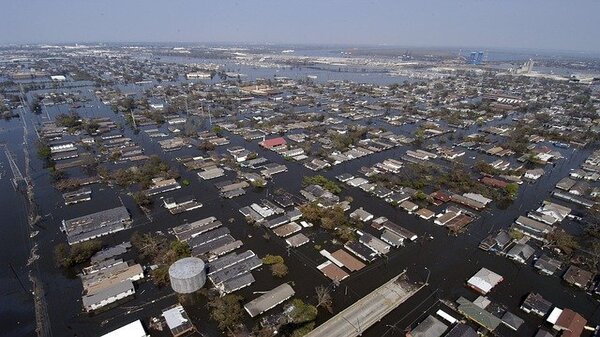
In the wake of Hurricane Ida, the Louisiana Department of Insurance (LDI) implemented a mediation program to assist policy holders with disputed insurance claims. Effective October 18, 2021, the program was implemented to assist in the prompt and reasonable settlement of disputed insurance claims.
The program is open to all authorized property and casualty insurers, as well as all surplus line insurers for personal lines residential insurance claims up to $50,000.00. Both the insurer or policyholder can submit a written request for mediation; the opposing party is free to accept or deny the invitation. If initially denied, the parties are free to later opt to participate.
If both parties agree to mediation, a mediator will be assigned and within 30 days a mediation will be scheduled at a local Mediation & Arbitration Professional Systems (MAPS) or Perry Dampf Dispute Solutions location in the Baton Rouge or New Orleans area. The initial mediation session allows for 90-minutes; however, parties are allowed to continue the mediation beyond the initial session at the agreement of the mediator.
The mediation program is free to all policyholders and a $600 fee is assessed to the insurer for the first 90-minute mediation session. If the parties and mediator agree to continue the mediation beyond the initial 90-minute session, additional fees will be assessed for the mediator’s services. The parties are to determine among themselves who will be responsible for the additional costs.
The parties are required to provide all relevant documentation to the assigned mediator and a detailed explanation of the claim and any obstacles to resolution. The policyholder can represent themselves or through counsel. They are even encouraged to bring knowledgeable individuals such as adjusters, appraisers, or contractors.
If a resolution is reached, even just partial, both parties will reduce the agreement to writing and sign the agreement. The insurer will be required to furnish any required payment to the policyholder within ten (10) days of signing the agreement. If the parties only reach a partial agreement, they will be permitted to continue to use the mediation services and schedule future mediation dates.
At this time, the program is scheduled to continue through June 30, 2022.